HSK 7–9 tests more than how much Chinese you know. You need to use it. Read a long passage. Explain a chart. Translate a message. Give a clear spoken answer.
This guide follows the official HSK(七—九级)样题, compiled by the Center for Language Education and Cooperation. The screenshots below come directly from that sample paper.
A note about the source: the sample paper includes omitted questions, marked “略”. It shows the exam structure and selected tasks. It does not contain all 98 questions in full.
The HSK 7–9 exam at a glance
HSK 7–9 is one exam. It is not three separate papers. Your performance determines the level reported.
“New HSK 3.0” refers to the wider framework of three stages and nine levels. This article covers the advanced HSK 7–9 sample paper. It does not describe the format of every HSK level.
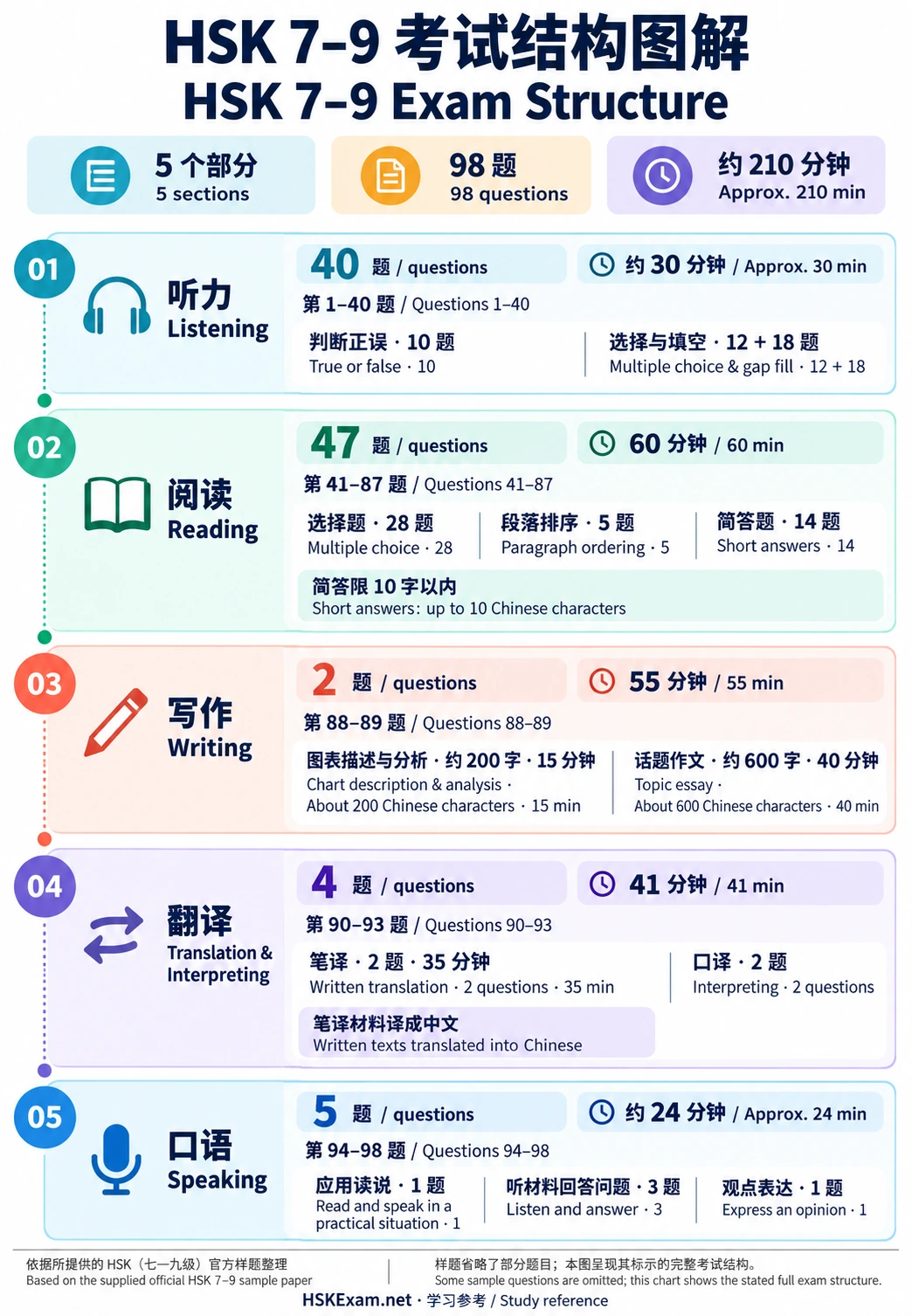
| Section | Questions | Time |
|---|---|---|
| Listening · 听力 | 40 | About 30 minutes |
| Reading · 阅读 | 47 | 60 minutes |
| Writing · 写作 | 2 | 55 minutes |
| Translation · 翻译 | 4 | 41 minutes |
| Speaking · 口语 | 5 | About 24 minutes |
| Total | 98 | About 210 minutes |
The number of questions can be misleading. Writing has just two tasks, but takes 55 minutes. Plan your practice by skill and time, not only by question count.
1. Listening: 40 questions
The listening section takes about 30 minutes. It has three parts:
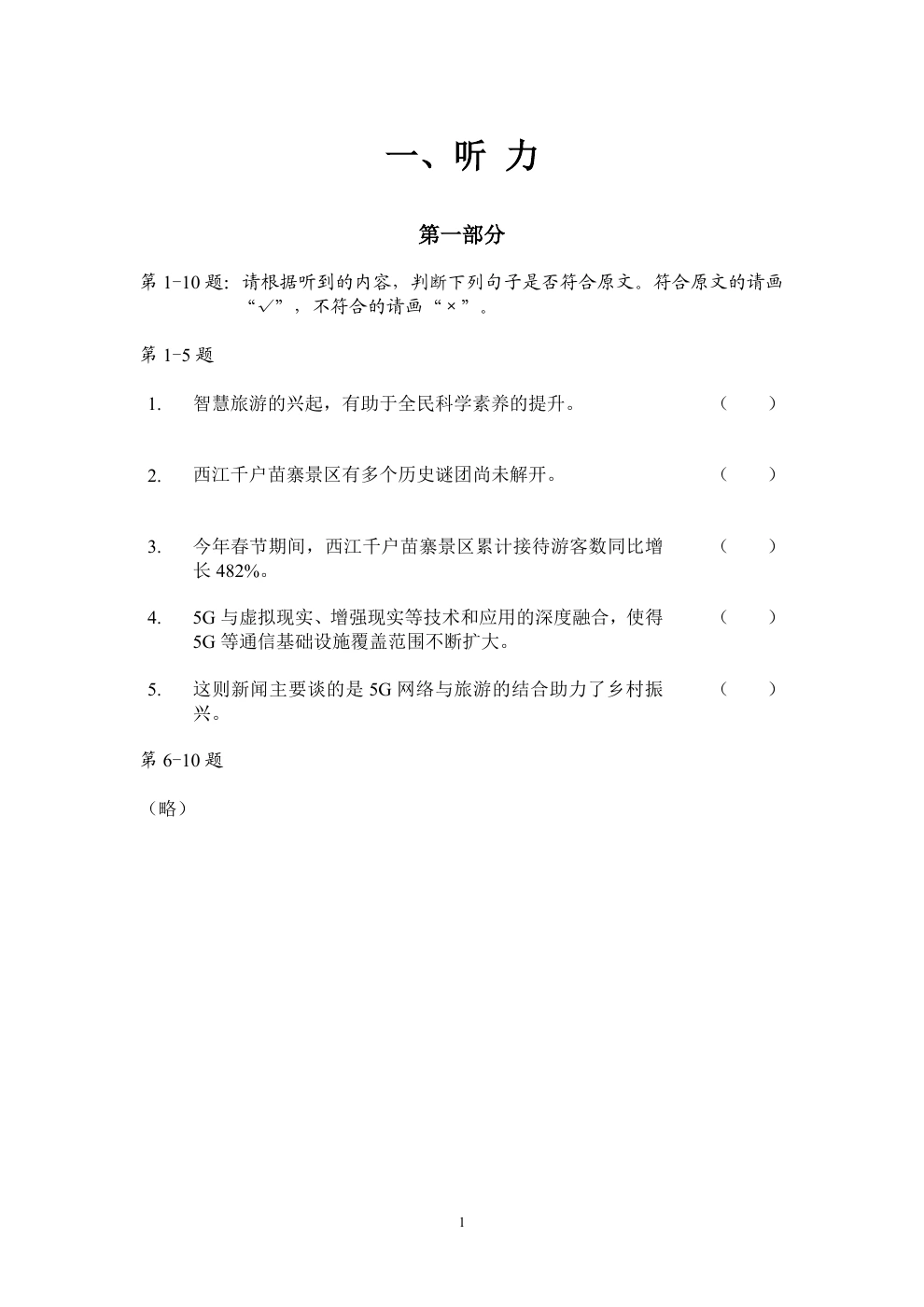
- Questions 1–10: true or false.
- Questions 11–22: multiple choice and gap filling.
- Questions 23–40: multiple choice and gap filling.
The first sample passage discusses tourism and 5G. The statements below ask you to judge what the speaker says. A familiar word is not enough. Listen for who did what, and whether the statement changes the meaning.
Try this: after checking an answer, replay the sentence that supports it. Write down the detail you missed. Then listen again without looking at the text.
Practise the HSK 7–9 listening sample.
2. Reading: 47 questions
You have 60 minutes. The tasks change as you move through the section.
- Questions 41–68: multiple choice. 28 questions.
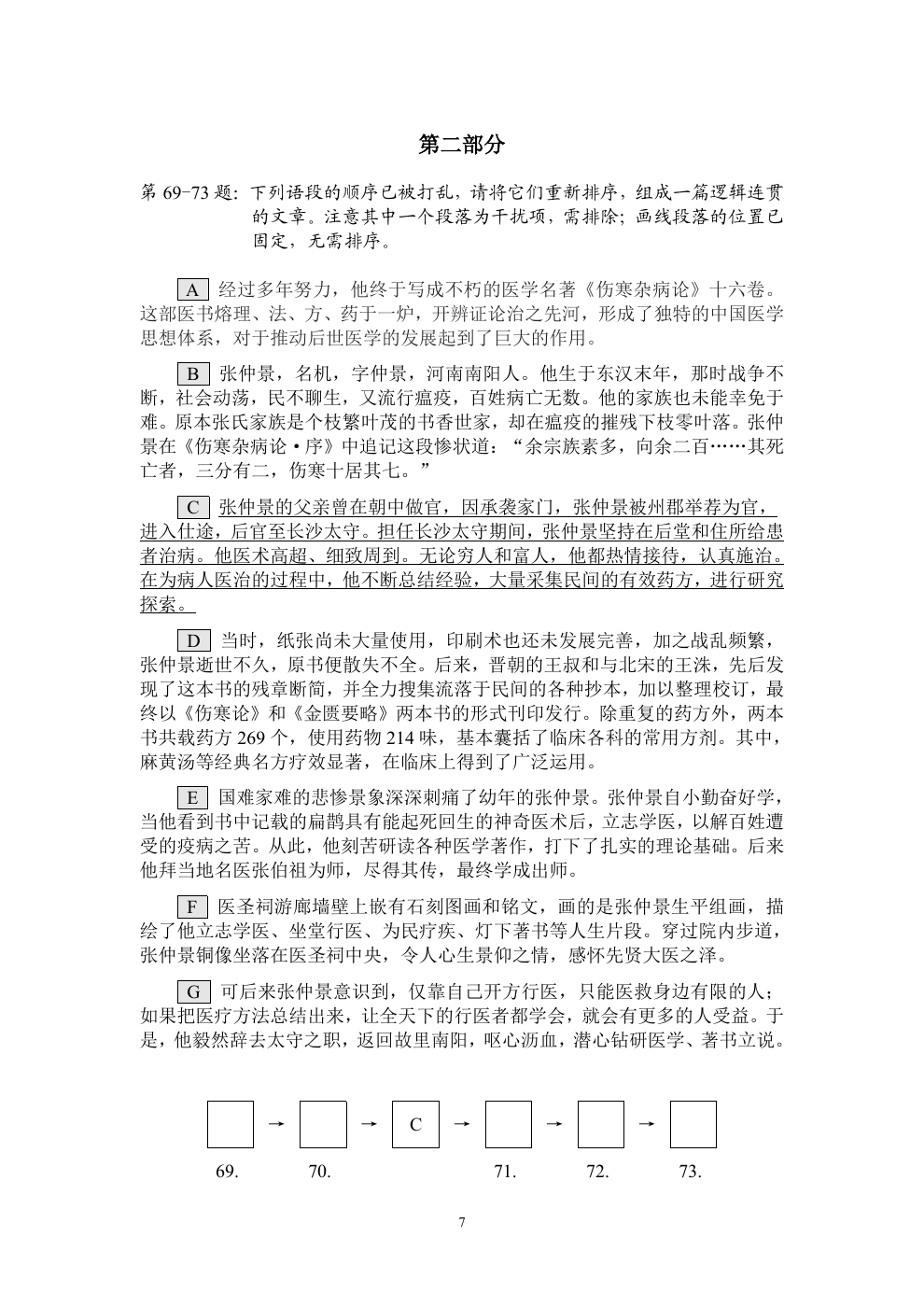
- Questions 69–73: paragraph ordering. Five questions.
- Questions 74–87: short answers. 14 questions. Each answer must stay within 10 Chinese characters.
The paragraph-ordering sample tells a story about 张仲景, Zhang Zhongjing. One paragraph is already fixed in place. One option does not belong. You need to follow the sequence and the links between paragraphs.
Try this: underline time markers and references such as “this” or “he.” Ask which earlier sentence each one points to. For short answers, keep the key information and remove extra words.
Practise the reading sample or read our HSK 7–9 academic reading tips.
3. Writing: two tasks, 55 minutes
Question 88: describe and analyse a chart
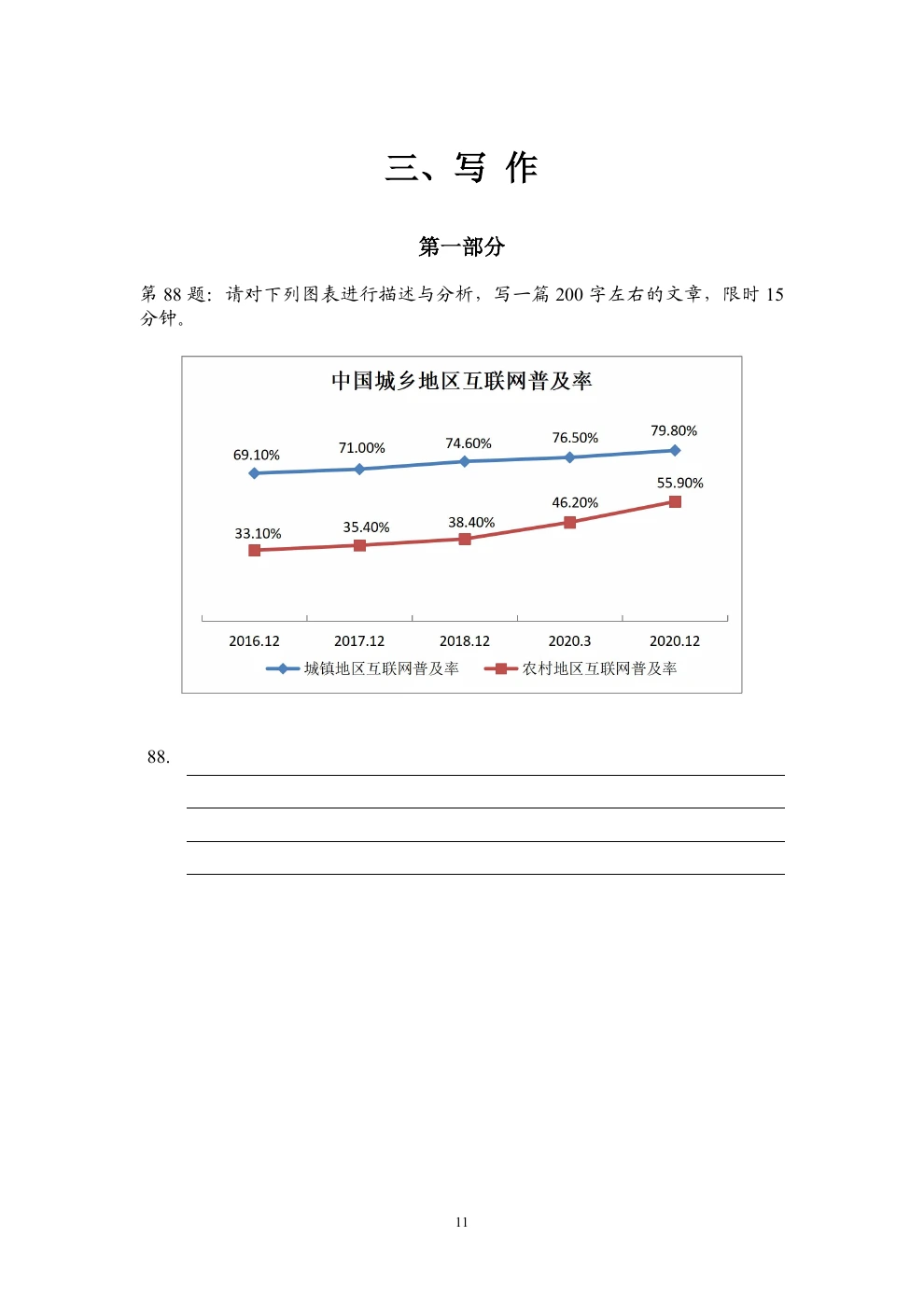
Write about 200 Chinese characters in 15 minutes. The sample chart compares urban and rural internet penetration in China.
Start with the main trend. Compare the two lines. Use a few useful figures. Avoid listing every number without explaining what it shows.
Question 89: write an essay
Write about 600 Chinese characters in 40 minutes. The sample prompt uses “工欲善其事,必先利其器”: to do a job well, first sharpen your tools.
You need a clear view and reasons to support it. Choose an example you can explain well. Leave time to check the logic and wording.
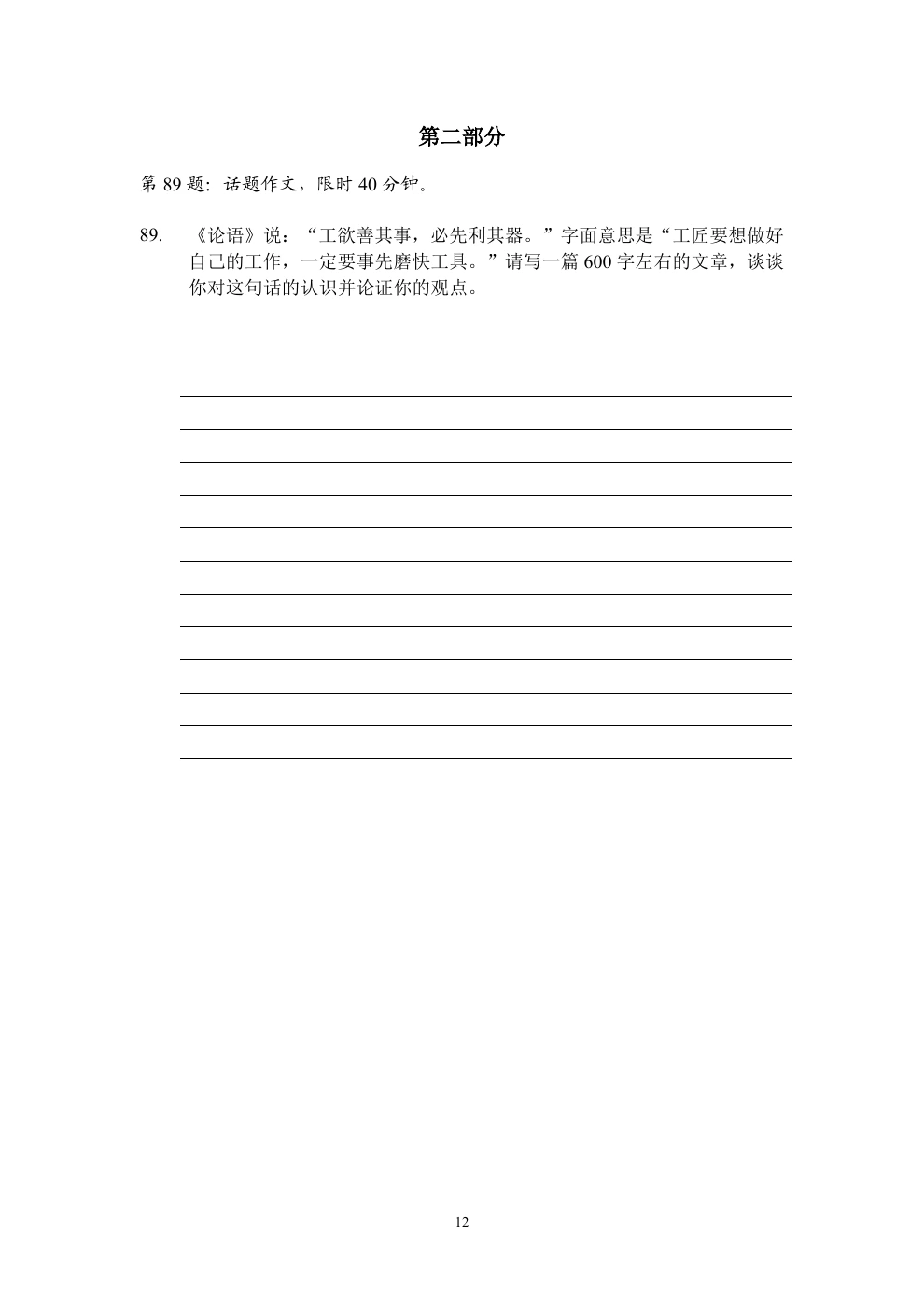
These length targets are in Chinese characters, not English words.
Open the writing sample. For paragraph practice, see how to use a general-to-specific structure.
4. Translation: written and spoken
This section has four questions and takes 41 minutes in total. It includes written translation and interpreting.
Questions 90–91: written translation
The written part lasts 35 minutes. In this English-language sample, you translate into Chinese. Question 90 discusses disaster experience and human behaviour.
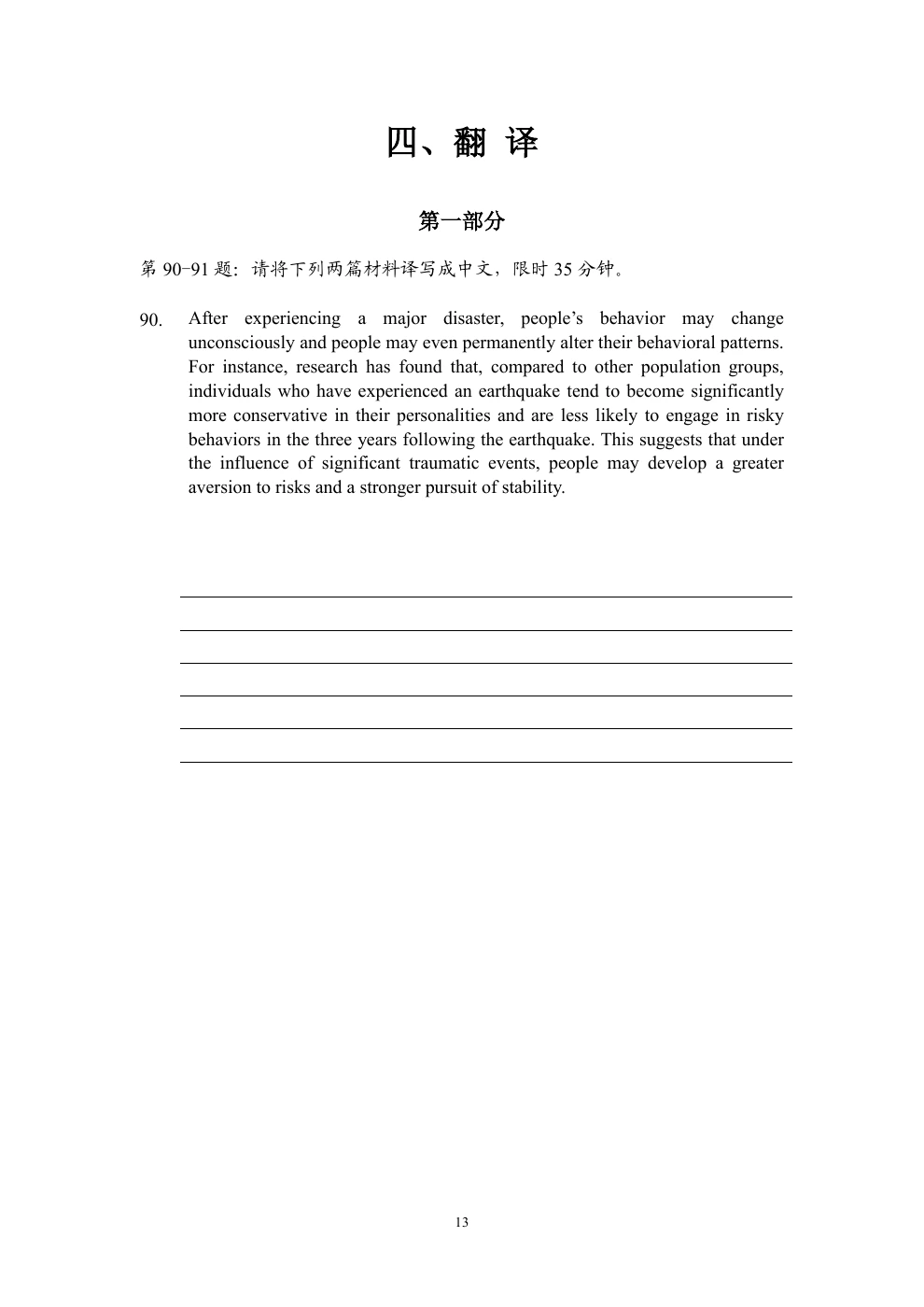
Try this: identify the main point of each sentence before translating. Check cause, contrast and uncertainty. A smooth sentence is still wrong if it changes the claim.
Questions 92–93: interpreting
The sample gives two minutes of response time for each interpreting task. Question 92 uses an English passage about “reverse tourism.” You need to convey it in spoken Chinese.
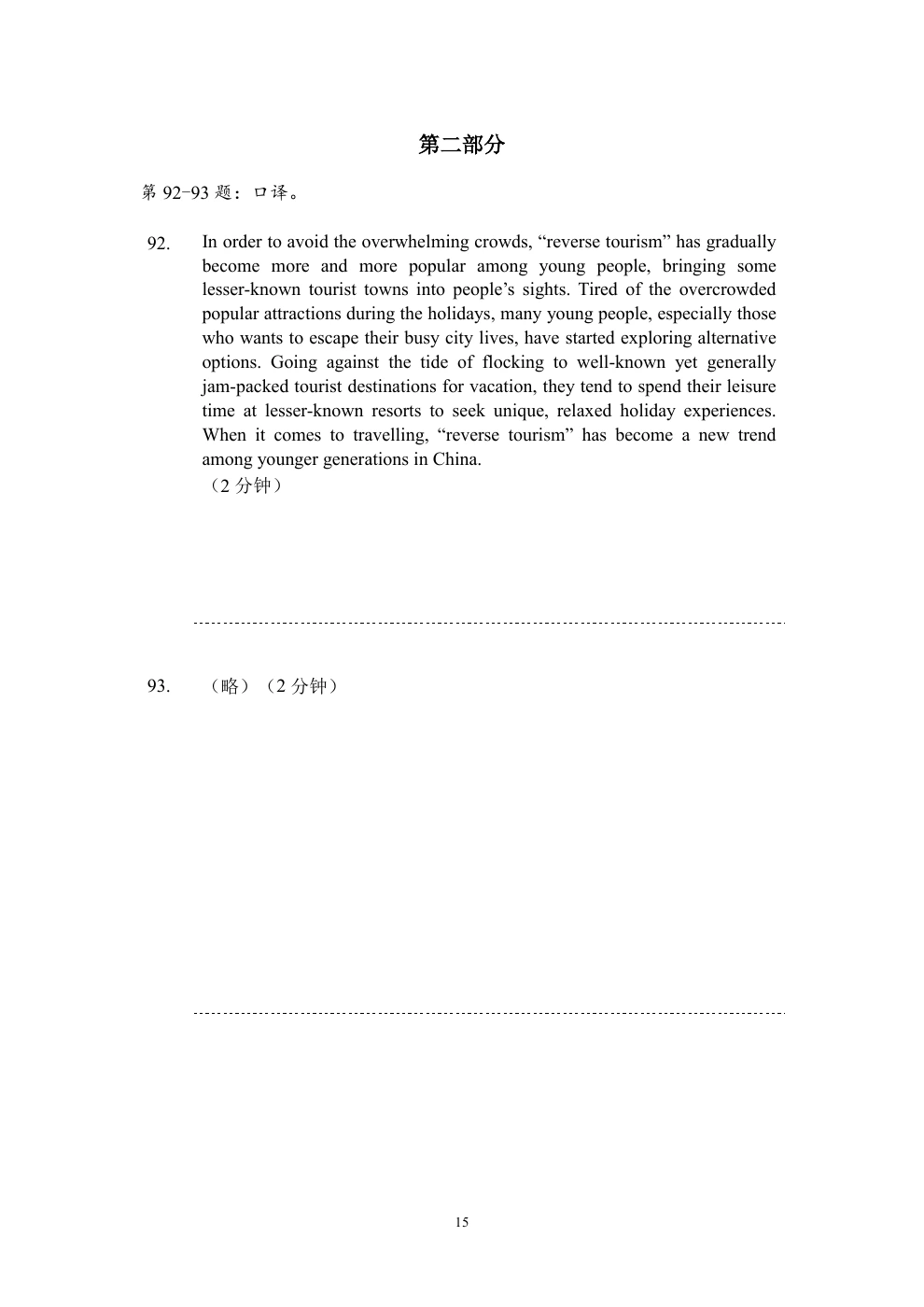
The two-minute figure is the answer time for each task. It is not the duration of the full translation section.
Practise the translation sample.
5. Speaking: five questions
The speaking section takes about 24 minutes in total. It combines reading, listening and spoken responses.
- Question 94: read practical information and speak. Three minutes to answer.
- Questions 95–97: listen and respond. The answer times are 30 seconds, 30 seconds and two minutes.
- Question 98: express an opinion. Three minutes to answer.
Question 94 gives museum visitor information. Your task is to explain it to a foreign friend. Pick out what the friend needs to know. Do not simply read the notice aloud.
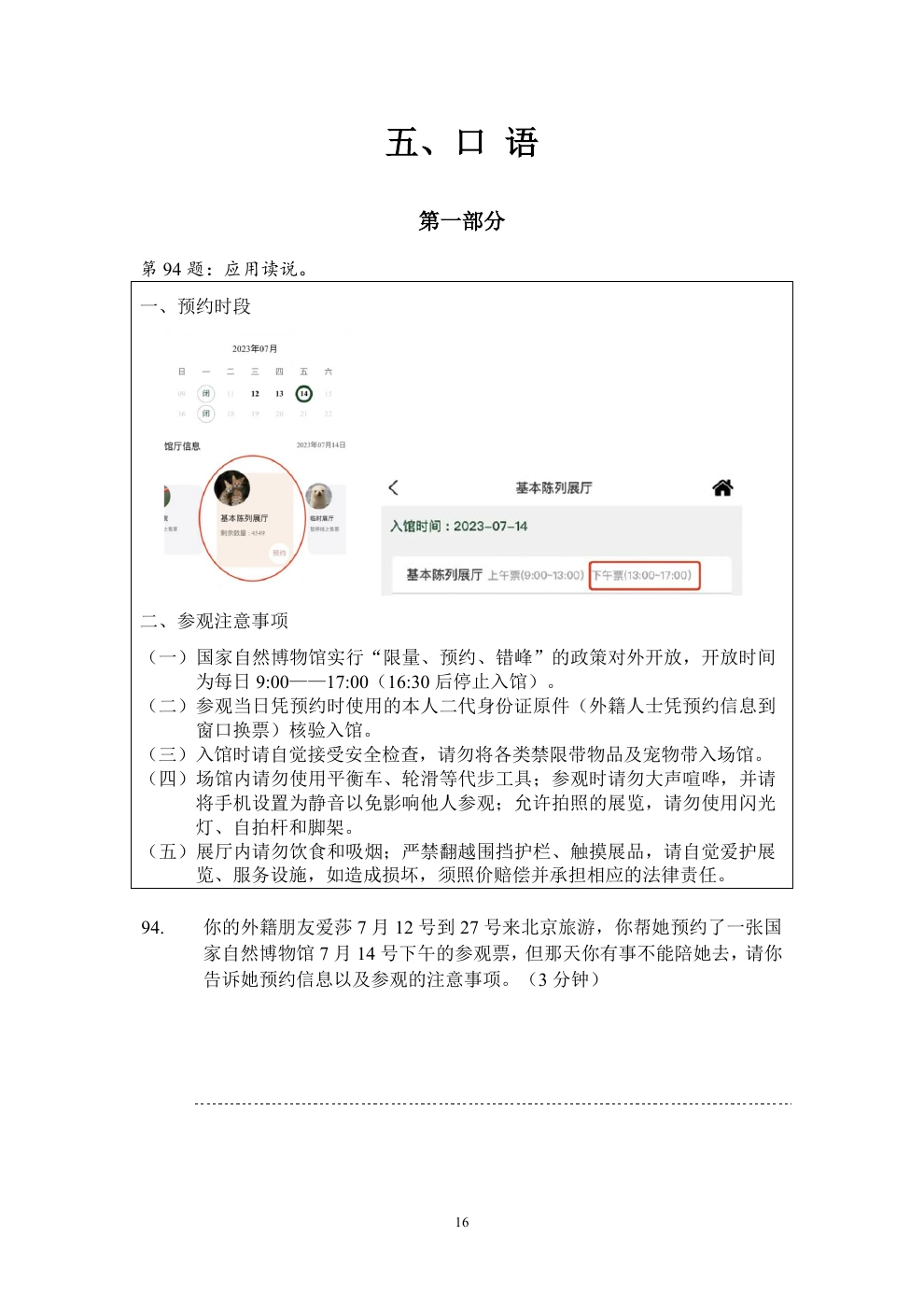
Try this: record your response. Listen once for missing information. Listen again for unclear sentences and long pauses. Then try the same task again.
How to turn this structure into a study plan
Start with one section. Use its time limit. Then spend time on the mistakes before moving to another paper.
For each error, write three things: what you answered, why it was wrong, and what you will check next time. Return to the question a few days later. Then try a different question that tests the same skill.
For writing and speaking, keep your first attempt. Compare it with your next one. Did you answer the task? Did you support your point? Did you finish on time?
Our guide to practice papers and a mistake notebook explains this routine in more detail.
You can find the sample sections and more study resources on the HSK 7–9 page. Use the official sample to understand the tasks. Use regular practice to work on the skills behind them.
Sources and scope
The section counts, timing and screenshots in this guide come from HSK(七—九级)样题, compiled by 中外语言交流合作中心 (Center for Language Education and Cooperation). Page references use the supplied 25-page PDF. Printed page numbers are included where available.
The screenshots are excerpts from the official sample, reproduced here for explanation. The bilingual overview is an HSKExam.net illustration. HSKExam.net is an independent study website.
For the exam overview and level framework, see the official HSK 7–9 page. Before booking, check the instructions for your test session and translation language.